

The Ultimate Guide to Jiu Jitsu: Fundamentals, Training Tips, Safety, Costs, and Global Travel
Jiu Jitsu appeals to people who enjoy strategic thinking, physical problem-solving, and continuous self-improvement. If you like chess-like mental engagement combined with full-body exercise, this martial art often feels like a dynamic puzzle you solve with your body. It is especially appealing to people who thrive on measurable progress, appreciate tactical discipline, and enjoy acquiring technical physical skills over time.
The primary purpose of Jiu Jitsu is to develop body awareness, mental resilience, and practical self-defense skills through grappling techniques. Practitioners learn to control opponents using leverage, timing, and positioning rather than relying strictly on size, weight, or brute force. The structured belt system creates clear milestones, allowing people to build enduring personal confidence through consistent training in a supportive community environment.
Essential Benefits of Training in Jiu Jitsu
Committing to Jiu Jitsu practice delivers transformative physical, intellectual, and social advantages for practitioners of all experience levels:
- Comprehensive Physical Conditioning: Builds full-body strength, joint mobility, flexibility, and cardiovascular endurance through functional bodyweight movements and resistance training.
- Tactical Problem-Solving Under Pressure: Strengthens problem-solving skills and strategic thinking under pressure as you execute offensive setups and defensive escapes.
- Enhanced Body Awareness and Coordination: Improves body awareness, balance, spatial management, and motor coordination through complex movement patterns on the mat.
- Mental Resilience and Emotional Patience: Encourages humility and mental resilience by requiring consistent physical effort, patience, and learning through trial and error over time.
- Vibrant Community and Training Partnerships: Creates strong community bonds and lifelong friendships through dedicated training partnerships and cooperative skill sharing.
Is Jiu Jitsu Right for You?
While Jiu Jitsu offers an empowering journey, this experience may not be enjoyable if you strongly dislike close physical contact, find slow skill progression frustrating, or prefer to avoid occasional physical discomfort. Beginners who feel hesitant about close-quarters contact can start gradually through introductory fundamental classes. Respectful academies emphasize safety, controlled contact, and mutual cooperation, making Jiu Jitsu accessible to men and women of all physical backgrounds.
Essential Gear, Apparel, and Maintenance Checklist
Equipping yourself with dedicated gear enhances performance, protects against minor injuries, and ensures optimal hygiene during every training session. Having the right preparation items ready in your gym bag ensures your time on the mat stays comfortable, safe, and focused.
Essential Gear Item | Primary Function & Usage |
Traditional Uniform | Wearing a properly fitted Gi allows comfortable movement and helps you learn grips correctly during traditional gi training sessions. |
Compression Layers | Investing in a quality Rash Guard underneath prevents mat burn, regulates body temperature, and keeps you comfortable during training. |
Dental Protection | Protecting your teeth with a fitted Mouth Guard allows you to train with confidence during live sparring and rolling. |
Joint Support | Using specialized Finger Tape can help protect joints, support tendons, and reduce strain during grip-intensive training. |
Hydration & Minerals | Staying hydrated with a reliable water flask and replenishing with Electrolytes after training helps maintain energy levels and speeds up recovery. |
Personal Hygiene Towel | Bringing a large microfiber Towel is helpful for wiping down between rounds, staying dry, and showering after class. |
Equipment Sanitizer | Keeping an Antimicrobial Spray in your gym bag for your gear helps maintain hygiene, eliminate odors, and sanitize equipment between washes. |
Structured Training Session Breakdown
Understanding how a standard class operates helps beginners navigate their initial months in Jiu Jitsu with clarity. Classes are structured to guide students logically from general physical preparation to technical application and live execution.
- Warm-Up and Joint Mobility (15 Minutes): Classes begin with light jogging, dynamic stretching, breakfalls, hip escapes, and mobility drills designed to prepare your joints and muscles for grappling movements.
- Technique Instruction and Drilling (35 Minutes): The head instructor demonstrates specific techniques, such as guard passes, sweeps, submissions, or positional escapes. Students pair up to practice these movements repeatedly against light resistance to build muscle memory.
- Positional Sparring and Live Rolling (30 Minutes): Practitioners engage in live sparring rounds, known as rolling. Positional sparring isolates specific scenarios (like escaping side control), while open rolling allows full application of your offensive and defensive skill set.
- Cool Down and Hygiene Routine (10 Minutes): Class concludes with light stretching, instructor announcements, and bowing off the mat. Using antimicrobial soap immediately after training reduces the risk of skin infections common in grappling sports.
Safety Guidelines, Mat Etiquette, and Risk Prevention
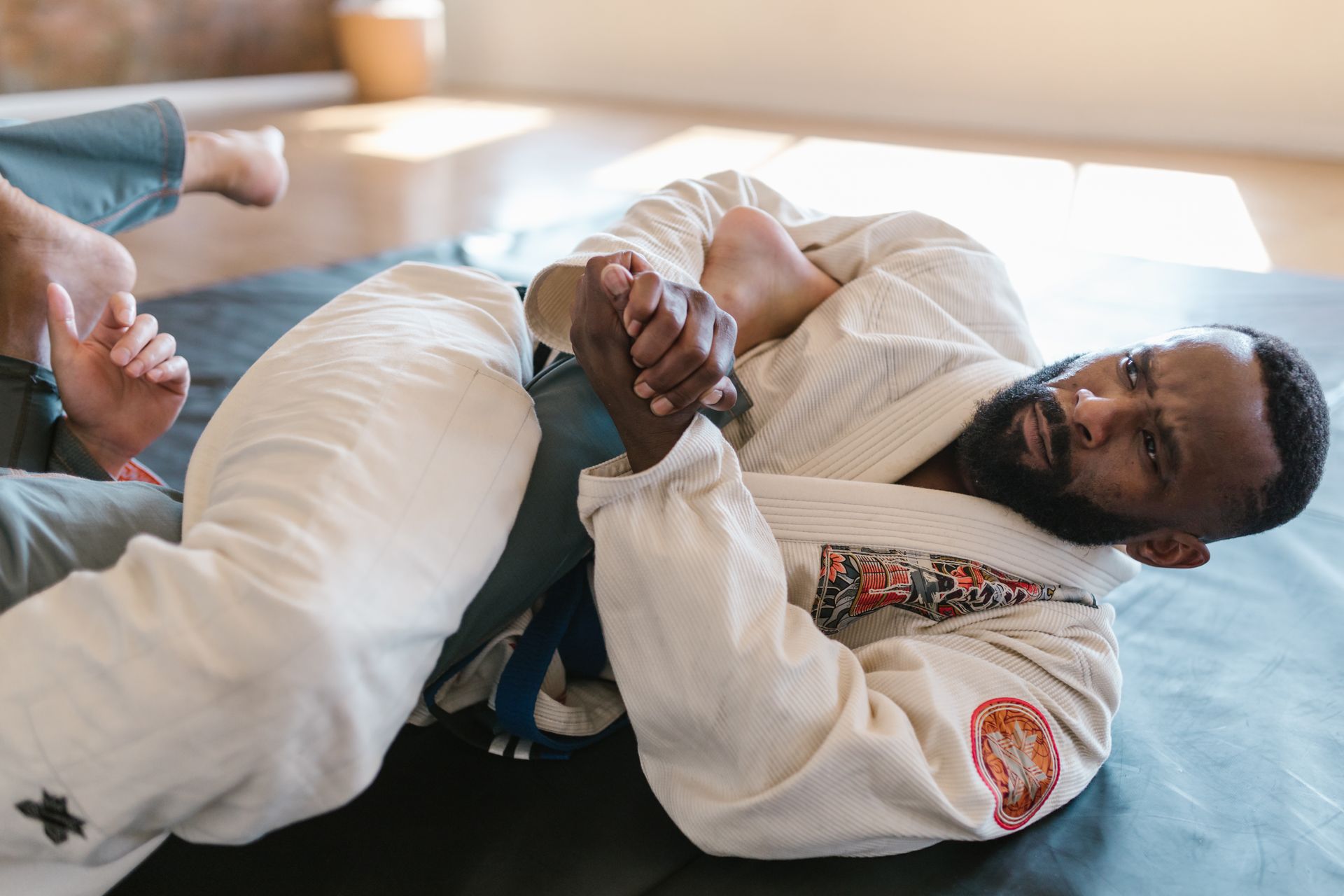
Practicing Jiu Jitsu is generally safe when performed with proper technique, controlled intensity, and respectful training partners. Adhering to established mat rules protects both you and your partners from unnecessary injury:
- Tap Early and Often: Tap early and often when caught in submissions because ego injuries happen when people refuse to tap. Submissions apply rapid mechanical pressure to joints or chokes; tapping signals your partner to release immediately.
- Inform Instructors of Pre-Existing Conditions: If you have any pre-existing injuries or physical limitations, inform your instructor and training partners before class begins so techniques can be adapted safely.
- Maintain Strict Personal Hygiene: Keep fingernails and toenails short and cleanly trimmed to prevent accidental scratches. Wash your uniform and rash guard after every single training session.
- Respect Mat Footwear Rules: Never walk onto the training mats wearing street shoes, and wear sandals or shoes whenever stepping off the mats into restrooms to prevent tracking bacteria back onto the training area.
- Control Your Movements: Focus on precise technique rather than explosive, uncontrolled physical force, especially when attempting unfamiliar submissions or sweeps.
Belt Ranks, Progression, and Learning Expectations
Progressing in Jiu Jitsu is a long-term endeavor that rewards patience, consistency, and problem-solving skills. The structured belt system creates clear physical and mental milestones throughout a practitioner’s journey.
Belt Rank | Typical Time at Rank | Core Learning Objectives & Focus Areas |
White Belt | 1 to 2 Years | Survival & Fundamentals: Focuses on learning basic postures, breakfalls, essential escapes, and understanding fundamental guard positions. |
Blue Belt | 2 to 3 Years | Defensive Mastery & Passing: Builds technical defense efficiency, guard passing systems, and consistent positional control. |
Purple Belt | 1.5 to 3 Years | Offensive Fluidity: Develops personalized game plans, smooth technical combinations, and advanced submission chaining. |
Brown Belt | 1 to 2 Years | Refinement & Heavy Pressure: Refines passing pressure, top control, takedown entries, and counter-attacking systems. |
Black Belt | Lifetime Dedicated Practice | Mastery & Teaching: Integrates complete technical synthesis, deep conceptual understanding, and mentorship of lower ranks. |
The art has a steep initial learning curve, but most academies offer beginner-friendly fundamentals classes. Expect to feel overwhelmed for the first few months because this is normal when learning complex physical grappling movements. Progress becomes noticeable around the 6-month mark for most practitioners as movement patterns become intuitive.
Detailed Cost Breakdown and Budgeting for Jiu Jitsu
Budgeting for Jiu Jitsu requires considering monthly tuition, essential uniform costs, protective gear, and personal hygiene maintenance items.
Expense Category | Typical Price Range | Service & Item Details |
Monthly Academy Tuition | $100 – $250 / month | Grants access to structured group classes, fundamentals, and open mat sessions based on facility location. |
Traditional Gi Uniform | $60 – $150 per gi | Durable cotton uniform required for traditional classes; buying a well-constructed Gi ensures long-term durability. |
Compression Rash Guard | $30 – $70 per shirt | Specialized compression top designed for grappling; wearing a quality Rash Guard protects against friction burn. |
Protective Mouth Guard | $15 – $40 | Protective dental equipment; wearing a fitted Mouth Guard protects teeth during sparring. |
Joint Support Finger Tape | $10 – $20 per pack | Protective medical tape; applying Finger Tape preserves finger joint integrity over time. |
Recovery Electrolytes | $15 – $30 per bottle | Essential hydration powder; supplementing with Electrolytes aids muscle stamina and recovery. |
Microfiber Gym Towel | $10 – $25 | Highly absorbent towel; carrying a clean Towel helps maintain personal sanitation. |
Antimicrobial Gear Sanitizer | $12 – $25 per bottle | Specialized cleaning spray; keeping an Antimicrobial Spray in your gym bag protects your gear between washes. |
Physical Requirements and Fitness Development
Practicing Jiu Jitsu requires mobility, grip strength, and cardiovascular endurance, all of which develop naturally through consistent training. You do not need to be in peak athletic condition to start your first class; the physical demands scale as your technique improves. Most techniques can be adapted for different body types, age groups, and physical limitations, making the art accessible to anyone willing to learn.
Classes typically last 60 to 90 minutes, including warm-up, technique instruction, and live sparring which is called rolling. Most practitioners train 2 to 4 times per week to balance skill acquisition with proper physical recovery. Over time, consistent mat time enhances functional core strength, grip endurance, and spatial reflexes far more effectively than traditional gym workouts.
Travel Logistics, International Camps, and Seminar Vacations
For dedicated practitioners, Jiu Jitsu offers an incredible gateway to international travel, destination training camps, and global martial arts tourism. Academies around the world welcome visiting practitioners with open arms, making it easy to drop into local gyms while traveling for business or vacation.
Booking Training Camps and Excursions
Attending multi-day training camps or world-class seminars in iconic destinations—such as Rio de Janeiro, Tokyo, California, or European coastal cities—combines intensive physical training with rich cultural exploration. When planning an international training trip, you can book a tour here or check activities here to explore local historic sites, guided excursions, and outdoor adventure tours between training sessions.
If your travel dates coincide with major international grappling championships or professional martial arts expos, you can book a ticket here to watch elite world champions compete live on stage.
Flights, Hotels, and Group Lodging Logistics
Organizing your travel connections and accommodations ensures your training trip runs smoothly from start to finish:
- Flight Reservations: You can check flights here or compare itineraries here to align your arrival times with academy camp schedules.
- Hotel Accommodations: You can check accommodation here to find comfortable, centrally located hotels situated near host academies and transit stops.
- Vacation Rental Homes: For team trips, academy groups, or longer stays, you can book a stay here to secure private apartments or homes equipped with full kitchen and laundry facilities for washing gear daily.
Cultural Significance and Philosophical Roots

Jiu Jitsu originated in Japan as an unarmed grappling system utilized by samurai warriors when disarmed on the battlefield. The art was later refined in Brazil during the early twentieth century, where practitioners adapted techniques to emphasize ground control, leverage, and practical submission holds. This evolutionary line eventually became a cornerstone of modern mixed martial arts and functional self-defense.
The art emphasizes respect, discipline, personal humility, and the fundamental philosophy that technical efficiency can overcome superior size and strength. The structured belt system creates clear milestones, allowing people to build confidence through consistent training in a supportive environment. Many practitioners describe Jiu Jitsu as a fulfilling lifestyle rather than just a hobby, as the problem-solving mindset cultivated on the mat positively influences career focus, stress management, and personal relationships off the mat.
Frequently Asked Questions About Jiu Jitsu
How often should a complete beginner train Jiu Jitsu each week?
A beginner should aim to train 2 to 3 times per week. This schedule allows sufficient repetition to retain technical details while giving your muscles, joints, and nervous system adequate time to recover between sessions.
What is the difference between Gi and No-Gi training in Jiu Jitsu?
Gi training involves wearing a traditional heavy cotton uniform where grabbing, pulling, and controlling the fabric is a central technical mechanic. No-Gi training involves wearing compression rash guards and shorts, relying on anatomical control points like wrist ties, neck ties, and underhooks rather than fabric grips.
Do I need prior martial arts experience to start training Jiu Jitsu?
No prior martial arts or grappling experience is needed. Most modern academies offer structured, beginner-friendly fundamentals classes designed specifically to teach breakfalls, basic positioning, and foundational safety rules from day one.
Explore More Fitness and Adventure Travel Guides
Looking for more detailed fitness guides, gear reviews, or travel recommendations for your next active vacation? Explore our complete collection of sports, martial arts, and lifestyle travel guides on Kenyago to plan your next major milestone!










 Welcome,
