
Roller Skating Gear, Safety Guidelines, and Dance Culture
Roller skating appeals to people who love movement, music, and the pure joy of gliding across a smooth surface with wheels beneath their feet. If you enjoy dancing, vibrant social activities, and physical experiences that feel both playful and rewarding, roller skating often delivers a kind of fun that is impossible not to smile through. It is especially appealing to people who want a creative, social form of exercise, love the retro energy of rink culture, and are looking for an activity that is as much about the overall vibe as it is about the workout.
The core purpose of roller skating is to glide, spin, dance, and cruise on four-wheeled quad skates across indoor hardwood floors, smooth outdoor plazas, or concrete skate parks built for dynamic riding. Whether you are lacing up for the first time at a local rink or flowing through an outdoor jam session, roller skating combines physical conditioning, rhythmic movement, and a joyful sense of freedom that keeps people coming back for decades. To explore more active sports, community events, and lifestyle guides, visit our Kenyago activities page.
Physical Fitness Advantages and Rhythm-Based Movement
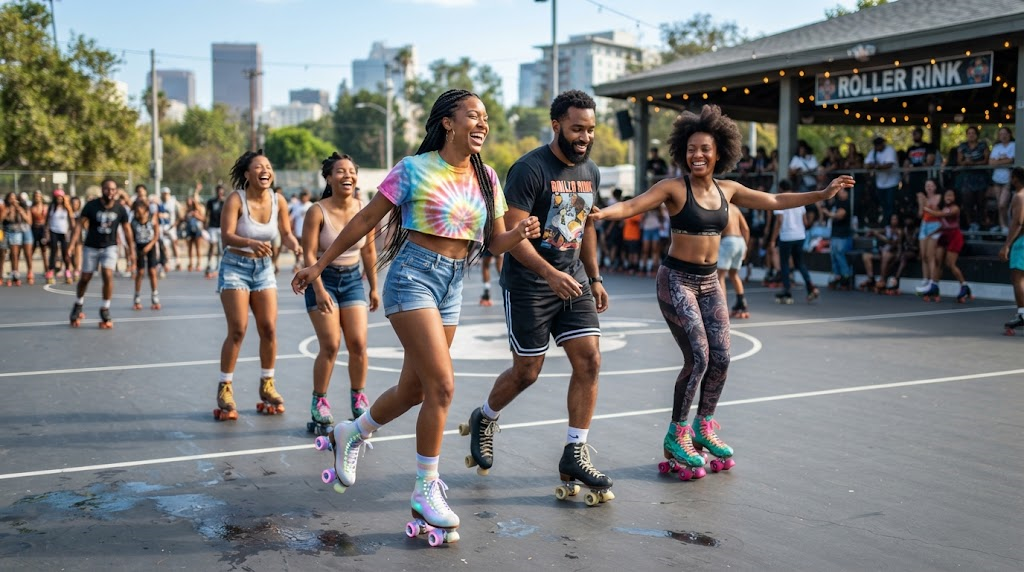
Committing to regular roller skating sessions provides a fantastic mix of cardiovascular health, lower-body conditioning, and expressive movement:
- Low-Impact Cardiovascular Conditioning: Gliding smoothly during roller skating raises your heart rate and boosts stamina without high-impact stress on your ankles or knees.
- Lower-Body and Core Sculpting: Pushing off off-center, executing crossovers, and balancing on four wheels during roller skating activates glutes, calves, hamstrings, and core stabilizers.
- Rhythmic Expression and Stress Relief: Matching your stride to up-tempo music while roller skating acts as an incredible outlet for mental stress and artistic expression.
- Enhanced Balance and Agility: Maintaining posture on shifting wheel bearings during roller skating sharpens proprioception and body awareness over time.
- Inclusive Social Community: Gathering at rinks or boardwalks makes roller skating a welcoming activity for skaters of all ages and backgrounds.
While roller skating welcomes beginners of all fitness backgrounds, the activity may not be ideal for individuals managing severe balance impairments, recent knee or ankle injuries, or acute joint instability.
Essential Safety Equipment and Gear Checklist
Equipping yourself with supportive quad boots, properly rated protective pads, and personal accessories keeps every session safe, comfortable, and stylish.
Essential Gear Item | Primary Utility and On-Floor Performance Function |
High-Support Quad Skates | Wearing properly fitted Roller Skates provides solid ankle alignment and edge control for smooth roller skating. |
Impact-Rated Helmet Protection | Wearing a multi-impact Helmet guards your head against unpredictable backward falls during roller skating. |
Heavy-Duty Knee Protection | Strapping on durable Knee Pads cushions direct knee impacts, allowing you to slide out of falls during roller skating. |
Anatomical Elbow Shields | Wearing flexible Elbow Pads guards your arm joints against hard landings on concrete or rink floors while roller skating. |
Rigid Wrist Guards | Wearing reinforced Wrist Guards prevents hyperextended wrist sprains when breaking falls while roller skating. |
High-Density Padded Socks | Wearing thick, moisture-wicking Socks prevents friction blisters and keeps feet snug inside your boots while roller skating. |
Hydration Vessel | Carrying an insulated Water Bottle keeps you hydrated during energetic dance sessions of roller skating. |
Quick Refuel Snacks | Stashing clean Snacks Or Energy Bars replenishes glycogen levels during long multi-hour outings of roller skating. |
Broad-Spectrum Sun Protection | Applying sweat-resistant Sunscreen shields your skin during warm outdoor plaza sessions of roller skating. |
Personal Audio Player | Carrying a compact Portable Music Player supplies high-energy beats for outdoor solo practice while roller skating. |
Checking your wheel nuts and toe-stop tightness before lacing up ensures your equipment stays reliable throughout your session.
Venue Comparison: Indoor Hardwood Rinks vs. Outdoor Outdoor Surfaces

Choosing where to skate shapes your wheel selection, protective gear requirements, and overall riding style:
Factor Category | Indoor Hardwood Rinks | Outdoor Plazas, Parks & Boardwalks |
Wheel Hardness (Durometer) | Uses harder wheels (90 – 103) engineered for slick wood floors, maximum speed, and crisp spins during roller skating. | Uses softer wheels (78 – 85) built to absorb asphalt vibrations, cracks, and small pebbles. |
Environmental Protection | Temperature-controlled environments with smooth, predictable floors safe from rain or wind during roller skating. | Requires sun protection, terrain monitoring, and protective pads for rougher concrete surfaces. |
Social Dynamics & Traffic | Features structured directional traffic, DJ music booths, skate wardens, and established floor rules. | Open-format sessions with mixed pedestrian traffic, requiring continuous environmental awareness while roller skating. |
Gear Wear and Tear | Minimal wear on boots, toe stops, and wheel urethane due to polished wood surfaces. | Faster wear on wheel urethane, toe stops, and protective gear from contact with concrete. |
Step-by-Step Learning Progression for Beginners
Adhering to a progressive skill sequence helps you build balance, master braking, and navigate traffic confidently:
- Practice Static Stance and Balance: Stand on carpet or grass in a wide “duck-footed” V-position to master your balance before roller skating.
- Learn the Safe Fall Technique: Practice bending your knees low and dropping to your knee pads and wrist guards rather than falling backward while roller skating.
- Master Marching and Gliding: Shift weight from foot to foot in small marching steps, allowing momentum to carry you into smooth glides during roller skating.
- Engage the Toe Stop or Plow Brake: Spread your feet wide and push outward on your inside edges to slow down, or drag a toe stop behind you for smooth stops.
- Practice Sticky Feet and Bubbles: Keep all four wheels on the floor while pushing your feet outward and pulling them back in to generate speed without lifting your skates.
- Learn Basic Edging and Turning: Lean your ankles gently onto inside or outside edges to execute smooth carving turns during roller skating.
- Navigate Traffic Flow: Enter public rinks counter-clockwise, maintain a steady speed, and look ahead to avoid sudden stops in front of other skaters.
Safety Guidelines, Fall Mitigation, and Floor Etiquette
While roller skating is fun and low-impact, taking proactive safety measures keeps your sessions injury-free:
- Always Wear Complete Protective Gear: Strap on your helmet, knee pads, elbow pads, and wrist guards before stepping onto any floor, especially when learning new tricks while roller skating.
- Check Hardware Pre-Session: Inspect axle nuts, toe-stop locknuts, and truck cushions before every outing to prevent equipment failure during roller skating.
- Respect Rink Traffic Flow: Follow the standard counter-clockwise direction in public rinks, leaving the center area for advanced trick or jam skaters.
- Stay Hydrated and Rest: Drink plenty of water and take regular breaks; tired leg muscles make it harder to maintain balance while roller skating.
- Keep Eyes Looking Forward: Look where you want to go rather than looking straight down at your feet, which keeps your center of gravity balanced over your skates.
- Master Controlled Stopping First: Ensure you can stop reliably using a plow brake, T-stop, or toe drag before heading into crowded rinks or downhill paths.
Financial Budgeting, Gear Costs, and Rink Rates
Getting started in roller skating is budget-friendly, offering straightforward equipment options for beginners and seasoned skaters alike:
Expense Category | Estimated Price Range (USD) | Smart Budget Strategy |
Rink Admission & Rental Fee | $5 – $15 session ($3 – $8 rental) | Visit weekday open sessions or discount family nights to enjoy lower rink entry prices for roller skating. |
Starter Quad Skate Package | $50 – $300 | Purchase entry-level vinyl or suede skates with durable aluminum plates for long-lasting performance. |
Protective Pad Set (Knee/Elbow/Wrist) | $40 – $130 total package | Buy complete protective pad bundles to save money compared to purchasing individual safety items separately. |
Impact Helmet | $30 – $80 | Look for dual-certified helmets ($CPSC$ and $ASTM$) for maximum head protection across indoor and outdoor environments. |
Replacement Outdoor/Indoor Wheels | $30 – $70 per set of 8 | Keep one soft outdoor set and one hard indoor set to adapt your skates easily to different surfaces. |
Casual indoor rink sessions typically run 2 to 3 hours, while outdoor jam meetups and themed rink nights often last 3 to 4 hours, keeping energy high with great music and community support.
Physical Demands and Accessibility Considerations
Because roller skating adapts easily to your preferred pace, skaters of all athletic backgrounds can enjoy gliding:
- Gentle Cruise Sessions: Relaxed, flat-floor skating builds cardiovascular health without overtaxing joints.
- Jam and Rhythm Skating: Fast-paced dance moves, footwork, and spins demand quick reflexes, high agility, and solid core control.
- Park and Ramp Skating: High-impact bowl riding and ledge tricks require intense leg strength, explosive power, and advanced fall control.
Top Global Roller Skating Locations and Iconic Rinks
From historic indoor rinks to famous beachfront plazas, these spots capture the true spirit of skating culture:
- Venice Beach Boardwalk (Los Angeles, USA): The iconic birthplace of outdoor dance skating, known worldwide for sun-drenched sea breezes, smooth paths, and lively music circles.
- Oaks Park Roller Rink (Portland, USA): Operating continuously since 1905, featuring a historic pipe organ mounted high above a massive hardwood floor.
- Hyde Park Skate Circle (London, UK): A legendary weekend gathering spot where rhythm skaters roll through intricate slalom lines to live DJ sets.
- Brooklyn Bridge Park Pier 2 (New York City, USA): A covered outdoor rink offering panoramic views of the Manhattan skyline alongside breezy river views.
Booking Event Tickets, Travel Charters, and Nearby Stays
Planning a trip around famous skating hubs or dance festivals requires coordinating travel, event passes, and lodging. You can book a ticket here to reserve entry for famous rinks, music festivals, or urban showcases. To book city tours, coastal excursions, or guided skate workshops, you can book a tour here or check activities here to make the most of your trip.
When arranging travel logistics to iconic skating destinations:
- Flight Reservations: You can check flights here or compare itineraries here to land convenient flight deals into major host cities.
- City Hotels: You can check accommodation here to find boutique hotels, downtown stays, and inns located near popular rinks and plazas.
- Spacious Rentals: When traveling with skate crews carrying multiple boot setups and gear bags, you can book a stay here to secure private apartments or beachfront homes with easy trail access.
History, Culture, and the Legacy of Jam Skating
Roller skating boasts a rich history dating back to the 1700s, when Belgian inventor John Joseph Merlin introduced primitive inline metal wheels in London. By the late 19th century, James Plimpton patented the modern four-wheeled “quad” skate, paving the way for smooth steering and the rise of indoor rinks across Europe and North America.
During the 1970s and 1980s, roller skating exploded into a massive global phenomenon fueled by disco, funk, and vibrant Black rink cultures in cities like Chicago, Atlanta, Detroit, and Los Angeles. Black skaters pioneered regional footwork styles, shuffle routines, and jam skating traditions that continue to shape modern rink culture. Today, roller skating remains a global symbol of joy, creative self-expression, inclusive community, and rhythmic freedom.
Frequently Asked Questions (FAQs)
What is the difference between quad skates and inline skates?
Quad skates feature four wheels arranged in a two-by-two rectangular grid with a broad toe stop, offering high stability for rhythm dance, while inline skates place wheels in a single line for high forward speed and outdoor distance.
How do I know if my roller skates fit correctly?
Skates should fit snugly without pinching your toes. Your heel should stay locked in place without slipping upward when you bend your knees, ensuring responsive control over your edges.
Should I choose hard or soft wheels for outdoor skating?
Choose soft outdoor wheels rated around $78$. Their softer urethane absorbs shocks, rolling easily over small pebbles, asphalt cracks, and uneven outdoor surfaces.
Lace Up Your Skates and Join the Flow
Whether you want to glide around a classic indoor wood floor, practice rhythm footwork in a sunny park, or cruise oceanfront boardwalks with friends, roller skating offers an incredible mix of fitness, creative style, and community joy. Put on your protective gear, turn up your favorite playlist, and roll onto the floor today!










 Welcome,
