

Golf Gear Essentials, Skill Building, and Iconic Courses
Playing golf appeals to people who enjoy precision sports, outdoor leisure, and the mental challenge of a game that rewards patience and continuous practice. If you like spending time on manicured green courses, refining your swing technique over time, and competing against yourself or friends in a relaxed yet focused environment, golf often feels deeply rewarding rather than frustrating. It is especially appealing to individuals who appreciate individual athletic disciplines, value business networking or socializing, and seek a lifelong sport accessible across all age groups.
The underlying purpose of playing golf is to complete an 18-hole or 9-hole course in as few strokes as possible while navigating strategic hazards, sand bunkers, water obstacles, and undulating greens. Players build technical skills across tee drives, iron approaches, fairway chipping, and putting while enjoying fresh air and pristine landscapes. Unlike fast-paced contact sports, golf allows players to move at a steady pace that combines low-impact physical movement, tactical focus, and quiet relaxation. To discover more engaging outdoor sports and active lifestyle guides, visit our Kenyago activities page.
Key Benefits of Playing and Essential Course Etiquette

Committing to regular golf delivers a uniquely balanced set of health, cognitive, and social benefits:
- Low-Impact Cardiovascular Fitness: Walking an 18-hole course covers between 4 and 6 miles, offering healthy calorie burn and joint-friendly exercise during golf.
- Precision and Spatial Awareness: Developing a repeatable swing path sharpens motor control, depth perception, and focus throughout your golf journey.
- Networking and Social Connection: Spending four hours on the fairways makes golf one of the premier sports for professional networking and building personal friendships.
- Mental Resilience and Stress Reduction: Concentrating on shot routine and enjoying natural surroundings provides a meditative reprieve from screen-filled routines during golf.
- Lifelong Physical Engagement: Adjustable handicap systems allow players of vastly different skill levels and ages to compete fairly in golf.
While golf offers wide-ranging benefits, the sport may prove challenging for individuals who struggle with slow skill progression, experience difficulty standing or walking for extended periods, or prefer high-velocity, high-intensity team sports.
Essential Equipment and Gear Checklist
Equipping yourself with tailored clubs, high-traction shoes, and protective accessories ensures optimal control, safety, and comfort on the course.
Gear Item | Primary Function and Course Utility |
Complete Set of Golf Clubs | Carrying proper drivers, irons, wedges, and putters using fitted Golf Clubs improves your overall distance and shot accuracy in golf. |
Multi-Layer Distance Balls | Carrying extra high-performance Golf Balls keeps you prepared for lost shots in deep rough or water hazards during golf. |
All-Weather Grip Glove | Wearing a snug leather Golf Glove prevents club slipping and reduces hand blisters during repetitive golf swings. |
Spiked or Spikeless Shoes | Wearing supportive Golf Shoes provides essential lateral traction and foot support on wet fairway turf during golf. |
Organized Stand/Cart Bag | Storing clubs, tees, towels, and gear in a durable Golf Bag ensures effortless transport across the fairways during golf. |
UV Protection Eyewear | Wearing polarized Sun Glasses reduces harsh glare off water hazards and protects vision while playing golf. |
Broad-Spectrum Sunscreen | Applying water-resistant Sun Screen shields skin against UV exposure over long afternoon golf rounds. |
Breathable Headwear | Wearing a comfortable Golf Hat shades your face and eyes from sunlight while tracking your ball during golf. |
Laser Distance Rangefinder | Using an accurate electronic Range Finder calculates exact pin distances to streamline club selection during golf. |
Insulated Hydration Container | Carrying a heavy-duty Reusable Water Bottle maintains focus and prevents dehydration across hot golf holes. |
Using proper equipment tailored to your posture, swing speed, and skill level significantly reduces physical fatigue while maximizing your control on every hole.
Comparing Golf Formats: Executive Par-3 vs. Full Championship Courses
Selecting the appropriate course layout helps beginners build confidence while offering experienced players a compelling challenge:
Feature Category | Executive Par-3 Courses | Full Championship Courses |
Total Holes & Distance | 9 to 18 short holes focused on short-game irons and putting. | 18 long holes featuring demanding Par 3, Par 4, and Par 5 layouts. |
Average Round Duration | Quick play requiring only 1.5 to 2.5 hours to finish during golf. | Full commitment requiring 4 to 5 hours of continuous play for golf. |
Intimidation & Difficulty | Low pressure; ideal for beginners, seniors, and quick practice runs. | Higher difficulty featuring narrow fairways, deep bunkers, and water hazards. |
Physical Demands | Light walking distance with short transitions between greens and tees. | Covers 4 to 6 miles of terrain, making cart usage popular for golf. |
Step-by-Step Guide to Mastering Your First Round
Preparing effectively before stepping up to the first tee guarantees a smooth, enjoyable experience for everyone on the card:
- Warm Up at the Driving Range: Hit loose wedge shots and mid-irons before your tee time to warm up your back muscles for golf.
- Check Local Local Rules: Review specific course protocols regarding cart path restrictions, dress codes, and pace-of-play guidelines for golf.
- Arrive Early at the First Tee: Step up to your assigned tee box five minutes before your tee time to mark your ball for golf.
- Practice Proper Course Etiquette: Repair ball marks on greens, rake sand traps, and replace divots on fairways during your golf match.
- Shout Warning Signals Loudly: If your ball veers off-line toward other players, yell “Fore!” immediately to maintain safety during golf.
- Maintain Pace of Play: Keep up with the group ahead by preparing for your shot while others are playing, ensuring efficient golf.
- Clean Equipment Post-Round: Wipe down club faces and shoe treads with a damp towel after completing your golf round.
Safety Guidelines, Physical Demands, and Risk Management
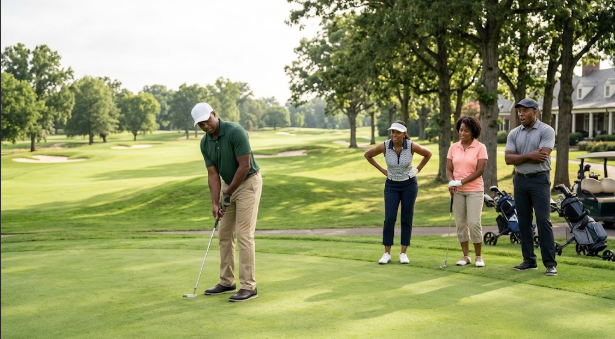
While golf is a low-impact activity, keeping basic health precautions in mind ensures years of injury-free enjoyment:
- Swing Mechanics and Back Health: Warm up your spine and core with gentle torso twists before swinging dynamically in golf.
- Sun Protection & Hydration: Reapply broad-spectrum sunscreen every two hours and sip water at every hole during summer golf sessions.
- Environmental Safety: Pay close attention to sudden lightning warnings; clear the fairways immediately when horn alerts sound during golf.
- Terrain Navigation: Walk carefully down steep bunker slopes and wet grassy inclines to prevent unexpected slips during golf.
Consulting a PGA professional for swing lessons helps establish biomechanically sound fundamentals, minimizing strain on your lower back, wrists, and elbows over time.
Cost Budgeting and Financial Planning
Understanding the entry costs of equipment and course access allows you to plan your hobby effectively:
Category | Estimated Cost Range (USD) | Smart Budget Strategy |
Beginner Club Set & Bag | $250 – $800 complete | Purchase high-quality pre-owned box sets or entry-level clubs when starting golf. |
Greens Fees & Cart Fees | $25 – $180 per round | Play twilight hours or municipal executive courses to secure lower rates for golf. |
Apparel & Footwear | $80 – $250 combined | Choose versatile spikeless golf shoes that transition comfortably off the course. |
Accessories (Balls, Glove, Tees) | $40 – $100 per season | Buy multi-pack soft compression balls designed for forgiveness off the tee in golf. |
World-Class Destinations and Historic Golf Courses
The international landscape of golf features legendary courses renowned for their breathtaking scenery, rich athletic heritage, and architectural brilliance:
- St Andrews Old Course (Scotland): Revered worldwide as the “Home of Golf,” featuring historic stone bridges, deep pot bunkers, and public coastal fairways.
- Pebble Beach Golf Links (California, USA): A majestic cliffside course offering spectacular views of the Pacific Ocean on every hole.
- Augusta National Golf Club (Georgia, USA): Famous home of the annual Masters Tournament, known for pristine landscaping and iconic azaleas.
- Royal County Down (Northern Ireland): A dramatic links layout set against the sweeping backdrop of the Mountains of Mourne.
Booking Tickets, Destination Tours, and Tournament Travel
Planning a travel itinerary around bucket-list golf destinations, major professional championships, or resort getaways becomes seamless with proper coordination. You can book a ticket here to secure gallery access for elite professional tournaments, historic exhibition matches, or resort events. To book guided historic club tours, legendary links walks, or private destination excursions, you can book a tour here or check activities here to enrich your trip.
When coordinating logistics and lodging for international golf travel:
- Flight Reservations: You can check flights here or compare itineraries here to arrange travel to world-renowned resort regions.
- Hotel Accommodations: You can check accommodation here to find luxury hotels and golf resorts adjacent to top-tier courses.
- Vacation Rentals: When traveling with a group of golfing companions, you can book a stay here to reserve spacious fairwayside villas and private estates.
Origins, Heritage, and Evolution of the Sport
The recorded history of golf traces back to 15th-century Scotland, where players used wooden sticks to hit pebbles into sand dunes along the eastern coast. In 1457, King James II famously banned the early version of the sport because he believed it distracted young men from practicing archery for military defense. However, the ban was lifted by King James IV in 1502 when he became an enthusiastic player himself, sparking royal endorsement across Britain.
The modern 18-hole format was established at St Andrews in 1764, establishing standardized rules for course layout, match play, and scoring. As British international commerce expanded during the 19th and 20th centuries, golf spread rapidly across North America, Asia, Australia, and Africa. Today, golf stands as an international phenomenon that combines timeless traditions of sportsmanship and honor with modern advances in sports science and club manufacturing.
Frequently Asked Questions (FAQs)
What is the difference between stroke play and match play in golf?
In stroke play, players count every single stroke taken across the entire round to determine the lowest total score. In match play, players compete hole-by-hole, where winning a hole earns one point regardless of total strokes taken on other holes.
How does the golf handicap system work?
The handicap system calculates a player’s potential ability based on past scores, allowing players of different skill levels to compete fairly against one another by adjusting their final net scores.
Do I need to buy a full set of 14 clubs as a beginner?
No, beginners often start with a half-set (such as a driver, 3-wood, 5-iron, 7-iron, pitching wedge, and putter), which makes learning swing basics easier and less overwhelming.
Step onto the Fairway and Elevate Your Game
Whether you aspire to refine your swing mechanics on the driving range, build lasting connections on the fairways, or travel to coastal courses around the world, golf delivers a lifetime of rewarding challenges and relaxed enjoyment. Gather your gear, reserve a local tee time, and experience the timeless appeal of the game today!










 Welcome,
