

Escape Room Experience: Setup, Strategy, and Team Tactics
An escape room appeals to people who enjoy structured problem-solving, collaborative thinking, and mental stimulation without physical strain. If you like using logic, pattern recognition, and active communication to work toward a clear outcome, an escape room often feels engaging rather than stressful. It is especially appealing to people who think best when there is a defined goal, a ticking clock, and limited outside distractions.
The core purpose of an escape room is to strengthen cognitive flexibility and group communication under manageable pressure. Participants practice breaking complex problems into smaller steps, adapting when initial strategies fail, and sharing information efficiently. The time limit creates urgency without long-term consequences, allowing people to build confidence in decision-making and teamwork in a controlled environment. To discover more engaging group activities, puzzle-solving adventures, and indoor lifestyle guides, visit our Kenyago activities page.
Cognitive Advantages and Collaborative Dynamics
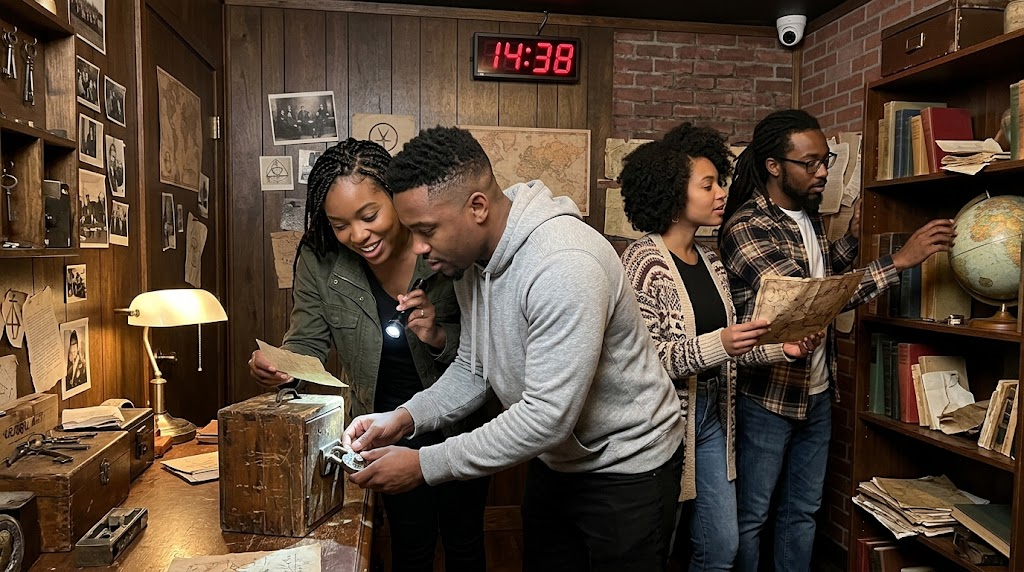
Participating in a well-designed escape room provides unique mental and interpersonal benefits that build practical real-world skills:
- Sharpened Problem-Solving: Working through an escape room challenges your deduction, spatial reasoning, and lateral thinking skills.
- Role Clarity and Team Communication: Navigating a challenging escape room encourages team members to assign task roles based on individual strengths.
- Adaptability Under Pressure: Solving puzzles in an escape room requires quick pivots when initial theories prove incorrect.
- Trust Building and Shared Achievement: Escaping an escape room together fosters deep mutual trust through collaborative success.
- Active Mental Engagement: Stepping into an immersive escape room offers a complete break from everyday digital screens and passive entertainment.
While an escape room provides a rewarding environment for group bonding, the experience may not be ideal for individuals who strongly dislike time constraints, claustrophobic environments, or heavy group reliance during problem-solving.
Gear Checklist and Preparation Essentials
While most venues supply all necessary puzzle props, arriving prepared with the right accessories keeps your focus entirely on the game.
Essential Preparation Item | Primary Function and Pre-Game Utility |
Grid-Lined Pocket Journal | Carrying a compact Small Notebook allows you to log sequence codes and track clues during your escape room briefing. |
Optical Inspection Tool | Stash a pocket-sized Magnifying Glass to spot tiny inscriptions and hidden symbols scattered across an escape room. |
Mobile Power Bank | Using a high-capacity Portable Charger keeps your smartphone fully powered for pre-game coordination before your escape room. |
Pre-Game Energy Snacks | Packing quick Snacks ensures your team maintains focus and mental energy throughout an intensive escape room. |
Insulated Water Vessel | Sipping from a sturdy Waterbottle keeps you hydrated before stepping into your scheduled escape room. |
Wearing comfortable clothing and flat-soled shoes allows free movement between clues, reaching under props, or crouching to inspect lower compartments.
Theme Comparison: Classic Mystery vs. High-Tech Immersive
Selecting the right environment depends on your group’s preferred difficulty, puzzle preference, and technological interest:
Feature Category | Classic Locks & Mystery Theme | High-Tech & Linear Storyline Theme |
Puzzle Mechanics | Relies heavily on padlock combinations, directional locks, hidden keys, and cipher ciphers in an escape room. | Features automated magnetic sensors, RFID triggers, laser grids, and electronic locks during an escape room. |
Atmospheric Design | Emphasizes physical props, vintage furniture, and hidden compartments throughout the escape room. | Uses theatrical lighting, surround sound, voice-acting cues, and digital displays within an escape room. |
Search Requirements | Demands thorough physical searching of drawers, books, and wall art across the escape room. | Focuses on pattern recognition, sequence timing, and logic-based terminal puzzles in an escape room. |
Ideal Group Profile | Excellent for first-time players and traditional puzzle enthusiasts entering an escape room. | Perfect for experienced teams seeking cinematic immersion and complex storylines in an escape room. |
Step-by-Step Tactical Sequence for a Successful Breakout
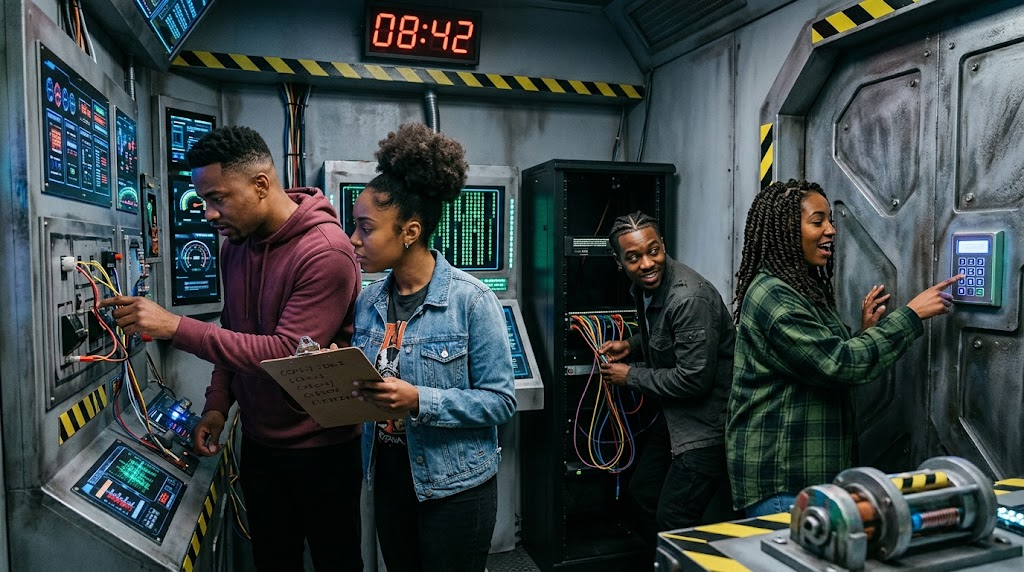
Following a systematic methodology ensures your team avoids common pitfalls and maximizes every minute inside:
- Conduct a Thorough Initial Room Search: Divide the physical space so team members inspect every drawer, rug, wall art piece, and hollow object in your escape room.
- Establish a Central Clue Station: Gather all physical items, keys, and unexplained artifacts on a single main table inside the escape room.
- Communicate Every Discovery Out Loud: Announce every found lock type, code, or key immediately so teammates can match items across the escape room.
- Organize Used and Unused Clues: Keep used keys inside their unlocked padlocks to prevent wasting precious minutes trying old keys in an escape room.
- Assign Specialized Sub-Teams: Pair up players to focus on separate puzzle tracks simultaneously across different areas of the escape room.
- Request Hints Proactively: If your team stays stuck on a single puzzle for more than five minutes, ask the game master for a prompt in your escape room.
- Perform a Final Synthesis Review: In the final ten minutes of your escape room, bring all remaining clues together to solve the ultimate exit lock.
Safety Guidelines, Rules, and Risk Management
Safety remains a top priority when hosting or participating in any indoor tactical game:
- Follow Game Master Briefings: Listen carefully to all safety rules given by your host before entering your escape room.
- Zero Brute Force Policy: Never force locks, tear down wall fixtures, or lift heavy furniture; every lock in an escape room opens easily when solved correctly.
- Emergency Exit Accessibility: Remember that modern venues keep safety doors unlocked or provide clear emergency release buttons near doors in every escape room.
- Mind Physical Boundaries: Refrain from climbing on tables or tampering with ceiling tiles, electrical outlets, or fire sprinklers inside an escape room.
- Accessibility Inquiries: Check with the venue beforehand if team members have mobility conditions or sensitivity to dim lighting or fog effects in an escape room.
Financial Budgeting, Pricing Tiers, and Group Rates
Planning your outing involves understanding standard player costs, private room options, and timing discounts:
Cost Category | Estimated Price Range (USD) | Smart Expense Optimization Strategy |
Per-Player Admission Ticket | $25 – $45 per person | Book off-peak weekday slots to score lower per-person rates for your escape room. |
Private Room Booking Buyout | $150 – $300 total group | Reserve the full room capacity to guarantee a private experience without random participants in your escape room. |
Pre-Game Snacks & Drinks | $10 – $25 total team | Bring your own snacks and water bottle for pre-game prep before entering your escape room. |
Corporate Team Event Package | $300 – $800 event | Inquire about multi-room package deals if hosting large corporate teambuilding outings at an escape room. |
Standard sessions typically run for 60 minutes, though arrival briefings and post-game debriefings add roughly 15 to 30 minutes to your total visit.
Physical Requirements and Accessibility Factors
While physical demands are minimal, knowing what to expect ensures a comfortable experience for everyone:
- Light Physical Activity: Expect basic movement like walking, crouching, reaching, and standing throughout the 60-minute duration of your escape room.
- Wheelchair Accessibility: Most modern venues design accessible floor plans, though calling ahead verifies doorway widths and puzzle table heights for your escape room.
- Visual and Auditory Needs: Venues often adjust lighting or provide written clue sheets upon request for players needing accessibility accommodations inside an escape room.
Top Global Destinations and Iconic Venues
Puzzle enthusiasts travel worldwide to experience world-class game design, Hollywood-grade set decoration, and innovative mechanics:
- Sherlock: The Official Live Game (London, UK): Combines immersive sets, digital audio, and authentic props from the TV series for a world-class escape room.
- The Basement (Los Angeles, USA): Renowned for high-tension theatrical horror, live actors, and intricate practical effects in an escape room.
- Paradox House (Tokyo, Japan): Offers cutting-edge technological integration, mechanical trickery, and elaborate story paths within an escape room.
- Escaparium (Montreal, Canada): Features massive multi-room environments with sprawling movie-set scale for an incredible escape room.
Booking Charters, Event Tickets, and Nearby Stays
Planning a trip around major gaming hubs or international conventions involves booking travel passes, tickets, and lodging. You can book a ticket here to secure entry passes for popular gaming venues, immersive exhibits, or puzzle conventions. To book city sightseeing tours, local attractions, or guided culinary walks around your venue, you can book a tour here or check activities here to enrich your travel schedule.
When organizing travel logistics to top entertainment hubs:
- Flight Bookings: You can check flights here or compare itineraries here to secure convenient flight connections into destination cities.
- Downtown Hotels: You can check accommodation here to find boutique hotels and central accommodations located near entertainment districts.
- Group Vacation Rentals: When traveling with a full team of puzzle enthusiasts, you can book a stay here to reserve spacious apartments or houses near top venues.
History, Evolution, and Pop Culture Impact
The origin of modern puzzle rooms traces back to digital point-and-click computer games of the late 1990s and early 2000s, such as Behind CLOSED DOORS and Crimson Room. In 2007, Japanese game designer Takao Kato converted these digital mechanics into real-world physical games in Kyoto, spawning Real Escape Game (REG).
The concept quickly spread across Asia, Europe, and North America during the 2010s. Modern game design has evolved from basic padlock-filled boxes into multi-room cinematic adventures with automated mechanics, professional actors, and non-linear storylines. Today, real-world puzzle adventures serve as popular corporate teambuilding exercises, social party activities, and dynamic storytelling venues around the globe.
Frequently Asked Questions (FAQs)
Are you actually locked inside the room?
No. Standard safety codes require emergency exits to remain unlocked or accessible via automatic release buttons, allowing players to step out at any time during an escape room.
What happens if our team gets stuck on a clue?
Game masters monitor your progress via closed-circuit cameras and microphones. You can ask for hints whenever your team reaches a standstill in an escape room.
How many people should be on an escape room team?
While rooms accommodate 2 to 10 players, an ideal team size is typically 4 to 6 people. This ensures enough minds to tackle multiple clues without crowding the physical space in an escape room.
Gather Your Team and Test Your Logic
Whether you are tackling a classic detective mystery, exploring an ancient tomb, or solving a futuristic sci-fi puzzle, an escape room offers an unbeatable mix of hands-on strategy, team bonding, and thrilling fun. Gather your friends, assign your roles, and step into your next challenge today!










 Welcome,
