

Flying a Drone: Gear, Techniques, Regulations, and Expert Pilot Tips
Flying a drone appeals to people who love technology, aerial photography, and exploring the world from a bird’s-eye view. If you enjoy capturing stunning footage, experimenting with new gadgets, and combining creativity with the outdoors, flying a drone often feels like one of the most rewarding and exciting hobbies you can pick up. It is especially appealing to people who appreciate photography, videography, and the thrill of piloting something through the sky.
The purpose of flying a drone is to capture breathtaking aerial footage, explore landscapes from above, and experience the unique satisfaction of piloting a piece of technology through the air. Whether you are filming a scenic hiking trail, capturing a family event from above, or simply practicing your flying skills in an open field, flying a drone opens up a whole new creative perspective on the world around you. To explore more outdoor activities, photography spots, and adventure gear breakdowns, visit our Kenyago activities page.
Core Advantages of Mastering Aerial Quadcopters
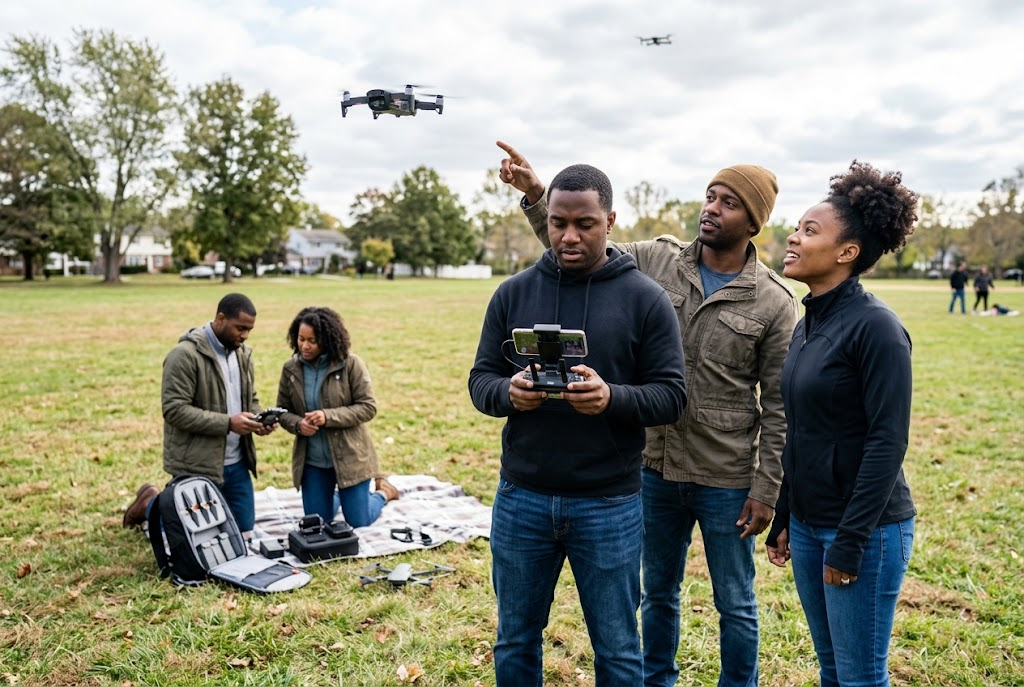
Choosing flying a drone as your primary outdoor pursuit delivers a variety of creative, technical, and social benefits:
- Unmatched Visual Perspectives: Flying a drone provides a unique aerial perspective for landscape photography, architectural shots, and outdoor videography.
- Dynamic Content Creation: Flying a drone creates stunning content for social media channels, personal travel vlogs, and professional client portfolios.
- Engaging Technical Hobby: Flying a drone offers an engaging, technical pastime that blends manual dexterity, flight software mastery, and spatial awareness.
- Exhilarating Outdoor Exploration: Flying a drone delivers an exciting outdoor experience that is both physically accessible and mentally challenging.
- Vibrant Pilot Community: Flying a drone connects you to a global network of drone enthusiasts, flight racing clubs, and digital content creators.
This experience may not be enjoyable if you are uncomfortable with modern mobile technology, dislike learning technical regulations, or live in heavily restricted airspace zones.
Essential Aircraft Hardware and Maintenance Gear Matrix
Selecting the right aircraft and field accessories ensures every flight session remains stable, productive, and safe:
Equipment Item Category | Primary Pilot Feature and Performance Capability |
High-Performance Mid-Tier Aircraft | Choosing a DJI Mavic Air 2 gives pilots a powerful platform with robust wind resistance and 4K camera capabilities. |
Ultralight Travel Quadcopter | Operating a DJI Mini 3 Fly More Combo provides an ultralight setup with extended flight times and obstacle detection. |
Entry-Level GPS Drone | Selecting a Holy Stone HS720 GPS drone offers a budget-friendly point of entry featuring reliable hover stabilization. |
Beginner Micro Quadcopter | Starting with a DJI Tello Quadcopter drone provides a low-stakes, safe environment for indoor and back-garden flight practice. |
High-Capacity Field Power Bank | Packing an Anker PowerCore Portable Charger keeps controller displays, smartphones, and tablets charged outdoors. |
Regulatory Framework, Licensing, and Safety Protocols
Flying a drone is a safe and enjoyable hobby when practiced responsibly, but staying compliant with modern aviation regulations is mandatory.
When operating recreational aircraft under 250 grams (or 0.55 pounds), pilots do not require official FAA registration, though they must pass the TRUST recreational test and maintain a strict ceiling of 400 feet while keeping the aircraft within their visual line of sight. For recreational aircraft weighing over 250 grams, mandatory FAA registration is required, requiring pilots to carry proof of registration while keeping max altitudes below 400 feet AGL and remaining clear of airports. Conversely, any commercial or professional work operations across any weight class require pilots to earn an FAA Part 107 Remote Pilot Certificate via a formal exam, alongside specific operational waivers needed for night flights or operations over crowds.
Critical Field Safety Rules
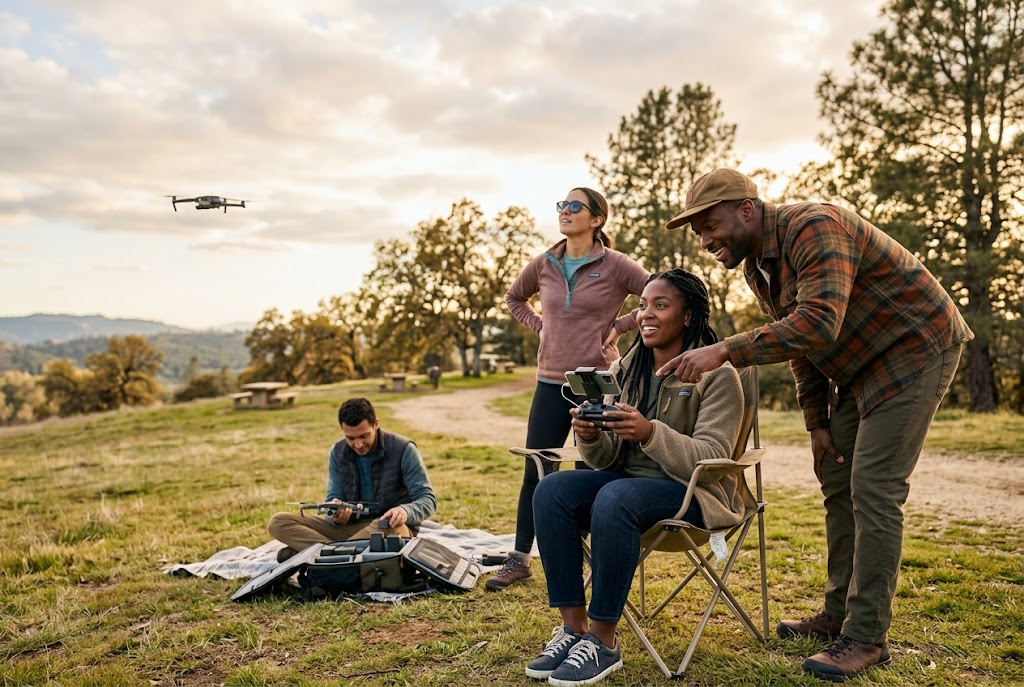
- Verify Airspace Permissions: Check local airspace maps and temporary flight restrictions (TFRs) before flying a drone in any public or private area.
- Maintain Visual Line of Sight: Always keep direct eyeball contact with your aircraft while flying a drone; do not rely solely on video screen feeds.
- Avoid Crowds and Moving Vehicles: Never practice flying a drone over gatherings of people, highways, or emergency response operations.
- Monitor Battery Depletion Rates: Set automated Return-to-Home (RTH) altitude parameters appropriately, and land immediately upon low-battery warnings.
- Inspect Hardware Pre-Flight: Examine propeller blades for micro-cracks, recalibrate the IMU/compass, and confirm GPS lock before flying a drone.
Real-World Pilot Insights: Interview with Omar Linton
Experienced aerial photographer Omar Linton shares his journey, practical lessons, and real-world advice on flying a drone:
Initial Experience and Aircraft Progression
Omar Linton recalls his first time flying a drone in Los Angeles, California. A friend brought out a compact quadcopter, and Omar immediately found piloting to be one of the coolest experiences imaginable. Shortly after, his sister Kim gifted him an entry-level model for the holidays.
Starting with a value-focused quadcopter allowed Omar to test his interest without a massive initial investment. Later, as his skills expanded, he upgraded to a faster model capable of shooting high-resolution 4K video while delivering longer control range and superior battery efficiency.
“I love the simplicity of top-tier consumer platforms,” Omar explains. “When you search for flight tips on forums, the massive user community gives you immediate assurance that you can troubleshoot any technical issue.”
Overcoming Flight Mishaps and Crash Recovery
Even seasoned enthusiasts encounter challenges when flying a drone. Omar recalls an incident while piloting near a park in Woodbridge, Virginia. His automated Return-to-Home (RTH) altitude had been set to tree-canopy level (100 feet) instead of the maximum safe altitude (394 feet). When an automated RTH command was triggered, the aircraft navigated directly into a tree branch.
Omar managed to negotiate a discounted repair fee with the manufacturer’s official support team and recovered costs via credit card purchase protection. He has also navigated unexpected landings on a hotel balcony in France and amidst thick foliage in Virginia’s Shenandoah Mountains.
To avoid costly mishaps, Omar strongly advises every pilot to purchase a comprehensive hardware protection plan when flying a drone, noting that crash protection gives you complete peace of mind in high-wind or high-obstacle environments.
Step-by-Step Practical Workflow for Beginner Pilots
Following a structured pre-flight routine minimizes technical errors and guarantees smooth flight execution:
- Check Local Airspace Maps: Open FAA B4UFLY or airspace authorization apps to confirm flying a drone is permitted at your chosen site.
- Conduct Physical Hardware Checks: Inspect quadcopter motors, lock propeller blades tight, and wipe down camera lenses.
- Set Return-to-Home (RTH) Altitude: Adjust automated RTH settings above the tallest trees or structures in your immediate flight area.
- Establish Satellite GPS Lock: Wait until your aircraft locks onto multiple GPS satellites to ensure hover stability while flying a drone.
- Practice Basic Stick Control: Begin in an open grassy field, practicing simple ascents, hovers, rotations, and box patterns.
- Keep Mobile Field Power Ready: Connect an Anker PowerCore Portable Charger to your controller setup to prevent mid-session display dropouts.
- Execute Clean Manual Landings: Gently bring the aircraft down onto a flat landing pad, power down batteries, and apply protective rotor guards.
Equipment Investment Breakdown and Ownership Expenses
Understanding the costs associated with flying a drone allows prospective pilots to select an entry path matching their budget:
Budget Tier & Equipment Category | Typical Price Range (USD) | Smart Pilot Purchasing Advice |
Toy / Micro Training Drones | $99 – $150 | Ideal for kids and absolute beginners; excellent for learning basic stick inputs indoors. |
Mid-Range GPS Travel Drones | $150 – $700 | Perfect balance of image quality, foldability, and wind resistance for recreational travel. |
Advanced Prosumer Packages | $800 – $1,200+ | Delivers obstacle avoidance sensors, 4K/60fps video, and raw photo formats for creators. |
Field Accessories & Chargers | $40 – $100 | Essential power solutions like an Anker PowerCore Portable Charger prevent dead screens. |
Manufacturer Protection Plans | $40 – $120 per year | Covers accidental water damage, collisions, and flyaways with minimal replacement fees. |
Flight sessions average 1 to 3 hours when carrying multiple battery packs.
Top Scenic Flying Destinations and Global Flight Spots
Pilots travel across the globe to capture scenic landscapes while flying a drone:
- Shenandoah National Park (Virginia, USA): Features dramatic mountain ridges, dense fall foliage, and rolling valley views.
- Icelandic Black Sand Beaches (Vik, Iceland): Unique coastal rock formations, crashing sea stacks, and volcanic dunes perfect for aerial cinematography.
- Loforen Archipelago (Norway): Majestic fjord scenery, steep coastal mountains, and picturesque fishing villages.
- Serengeti & Great Rift Valley (East Africa): Vast savanna landscapes, dramatic escarpments, and open terrain offering incredible scale.
Booking Travel Logistics, Aerial Tours, and Accommodations
When planning a travel itinerary centered around flying a drone in picturesque locations, booking your logistics early simplifies carrying delicate camera gear. You can book a ticket here to secure admission to regional transport hubs or outdoor flight parks. To join local photography excursions, guided nature walks, or boat charters, you can book a tour here or check activities here to find pilot-friendly local guides.
For smooth travel arrangements with sensitive electronics:
- Airline & Flight Bookings: You can check flights here or compare itineraries here to select airlines with clear lithium-ion battery carry-on policies.
- Hotels & Eco-Lodges: You can check accommodation here to find lodging with reliable power stations for overnight battery charging.
- Scenic Vacation Rentals: When traveling with film crews or family, you can book a stay here to secure private properties with spacious backyards ideal for safe pre-flight gear testing.
Evolution, Commercial Utility, and Global Drone Culture
Unmanned aerial vehicles (UAVs) originated in military applications throughout the 20th century before expanding into high-end cinema production. Over the past decade, rapid advancements in micro-electronics, brushless motors, and GPS stabilization democratized aerial imaging. What once required commercial helicopters and multi-million dollar camera rigs can now be achieved using a compact aircraft carried in a backpack.
Today, flying a drone represents a convergence of technology, artistic expression, and practical utility. Drones play crucial roles in agricultural surveying, search and rescue operations, structural building inspections, and environmental conservation. Beyond commercial utility, a passionate global community engages in FPV (First Person View) racing, aerial photography showcases, and collaborative flight forums, celebrating the freedom of viewing our planet from the sky.
Frequently Asked Questions (FAQs)
Do I need a license for flying a drone recreationally?
In the United States, recreational pilots do not need a Part 107 license but must pass the free FAA TRUST online test, register aircraft weighing over 250 grams, and follow community safety guidelines.
What should I do if my drone loses signal mid-flight?
Modern aircraft automatically execute a Return-to-Home (RTH) procedure when control signal drops. The drone will ascend to its pre-set RTH altitude and navigate back to its takeoff GPS coordinates automatically.
Can I fly my drone in rain or heavy wind?
It is not recommended. Water can damage electronic speed controllers (ESCs) and sensors, while strong winds drain battery life rapidly and increase crash risks while flying a drone.
Charge Your Batteries and Take to the Skies Today
Whether you are launching your aircraft over scenic mountain valleys, capturing cinematic family gatherings, or mastering hover drills in a local park, flying a drone provides an incredible mix of creative freedom and technological excitement. Choose the right hardware, pack extra batteries, adhere to local flight rules, and experience the thrill of flying a drone today!












 Welcome,
